4 Workshops And Other Resources
To doubt everything or to believe everything are two equally convenient solutions; both dispense with the necessity of reflection.
Henri Poincaré
4.1 First Year Mathematics Workshops
4.1.1 Introduction to Workshops
Maths Workshops are interactive and supportive sessions that are designed to help students mainly with coursework and classes, but welcome students to come and ask questions about any aspect of the maths. These are held daily in the Maths Student Centre and the timetable for them is published on Blackboard once the semester starts. First year students can get help from the member of staff present there or any of the designated ‘workshop helpers’, who are usually third-year or postgraduate students.
4.1.2 More Than Just Coursework Help
When I first started, I thought the first year workshops were basically just getting help for your coursework and nothing else. But the biggest difference I noticed was that when I genuinely struggled with a problem, even if I got nowhere, the workshop became the most valuable resource.
If you go hoping someone will just show you the solution from scratch, you leave having learned much less than you could have. Even 15 minutes of serious attempt make major impact as it makes you aware of where you’re stuck, and gives you something specific to ask about.
4.2 AI and Outsourcing Thinking
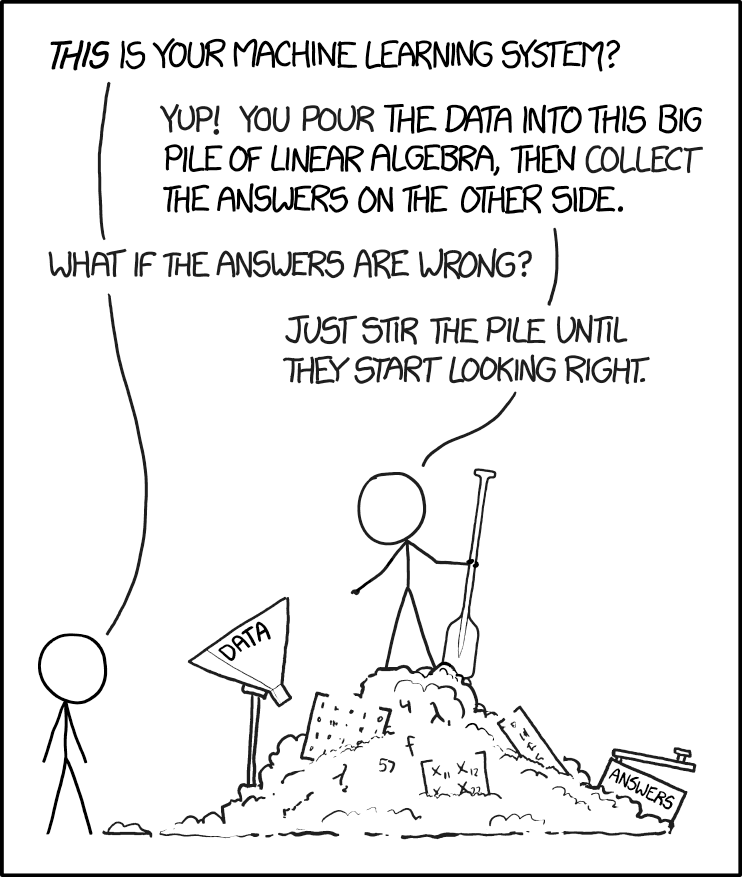
It would be highly ignorant and unrealistic of me to not talk about Generative AI. We all know it exists and it can generate solutions instantly. And sometimes, it is useful, it can clarify notation or rephrase definitions and help fill in some gaps in reasoning.
However, the biggest drawback of AI is that it removes the part of the process that actually builds the understanding. If you ask AI to generate a full solution to a problem you haven’t seriously attempted, you might feel productive, even pleased looking at the solution, but you’ve just skipped the uncomfortable but crucial bit where your brain learns by trying, failing, and reattempting ideas. And that’s the uncomfortable bit where understanding takes place.
GenAI is very good at doing things, so it’s tempting to just ask it for answers. But imagine training for a marathon with a personal trainer. You wouldn’t expect your trainer to do all the running and training for you and then expect yourself to perform well on race day. Their role is to challenge you, guide you, and help you get stronger.
Generative AI should be used in the same way. There is a difference between using AI to complement your learning, and using it to replace your work and your thinking entirely, and it is important that you be honest with yourself about which one you’re doing. At the end of the day, you are the one being impacted by your use/misuse of AI, so take accountability.
The university has its own recommendations on using GenAI, so I urge you to read it1 because it matters not only due to academic integrity, but because this degree is about learning to think independently.
4.3 Other Resources
Alongside lectures and problem sheets and office hours, there are a number of external resources that can help clarify ideas or offer a different perspective. This is not an exhaustive list, just a few that I’ve found useful in the first year.
4.3.1 YouTube Channels
Michael Penn
Amazing channel, I found it very useful for some Number Theory and Linear Algebra concepts. Also has some great content if you want to explore topics deeply.
Dr Trefor Bazett
Very useful channel when you want a direct, worked through explanation of a topic. I found it very useful to visualise some multivariable calculus topics.
Minute Physics
Has fun whiteboard-style time-lapse videos that help explain physics concepts entertainingly.
StatQuest with Josh Starmer
Probably one of the best channels for developing intuition in statistics
3Blue1Brown
By far one of the best places to go to if you want to build intuition for topics, especially in Linear Algebra and Calculus.
Numberphile and Computerphile
The videos may not directly help with anything specific, but they do keep the curiosity around the subjects alive!
4.3.2 Online resources
Paul’s Online Maths Notes
Practical and reliable resource, especially for Calculus-style topics and worked examples.
Reading List
Some modules have recommended textbooks, and you can find the reading list by searching the module.